TecTopics: Extended Panels – Tapered Polyiso Benefits and Strategy
When tackling options to reduce overall costs on a tapered roof system, designers look at a variety of specialty products including prefabricated target sumps, prefabricated hips and valleys, and extended panel profiles. The design of your tapered roof system determines if any of these options will benefit your “material cost vs. labor cost” totals.
Insulation adhesive costs can be lowered drastically by reducing the number of layers in a tapered profile. Take a standard 1/8” taper profile with a 4-panel repeat:
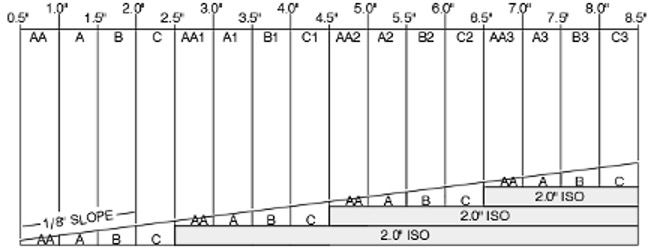
Using layers of 2.0” flat insulation at every repeat, you’re looking at multiple layers of 2.0” to achieve a 64’ run. It goes without saying that more layers of insulation require more adhesive to adhere the system. This profile requires 40 panels of application.
Let’s look at the same 64’ run but using extended panels:
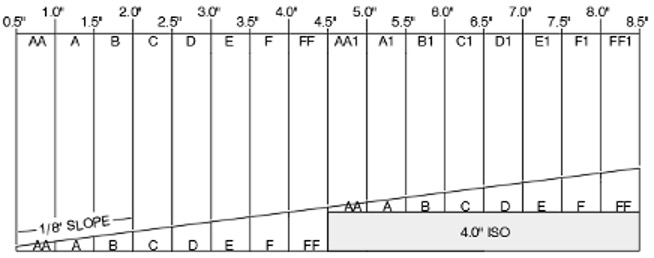
Using this extended panel profile, we’re able to lower the number of insulation layers, thus reducing the adhesive required to adhere the system. This profile requires only 24 panels of application.
The easiest way to show the benefits of extended panels is a side-by-side project analysis:
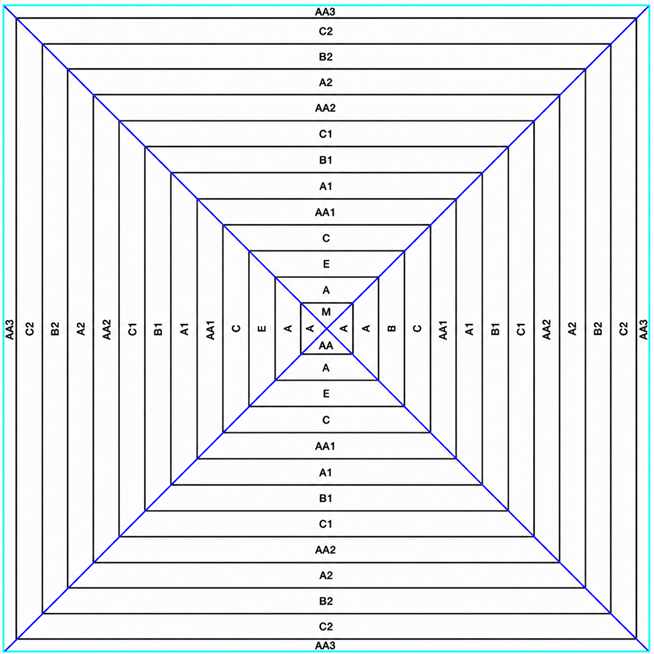
The design on top (4-panel repeat) requires 257 squares of application. The design on the bottom (8-panel repeat) requires 159 squares of application. The cost of insulation for the extended panel option is only slightly more than the standard repeat option.
The standout savings in the extended panel design are in adhesive costs. The extended panel option will require 4 fewer tanks of adhesive, yielding a significant savings in adhesive. Regarding labor costs, using fewer layers of insulation means less material handling and field cutting.
The above comparisons are utilizing the 1/8” profile as the example here, but extended panel options are available in all profiles (1/8”, 3/16”, 1/4”, 3/8”, 1/2”).
For more information, check out the Polyiso Extended Panels Advantage Sell Sheet.
Need a price quote for a tapered insulation system? Fill out our Tapered Quote Request Form.
Insulation adhesive costs can be lowered drastically by reducing the number of layers in a tapered profile. Take a standard 1/8” taper profile with a 4-panel repeat:
Using layers of 2.0” flat insulation at every repeat, you’re looking at multiple layers of 2.0” to achieve a 64’ run. It goes without saying that more layers of insulation require more adhesive to adhere the system. This profile requires 40 panels of application.
Let’s look at the same 64’ run but using extended panels:
Using this extended panel profile, we’re able to lower the number of insulation layers, thus reducing the adhesive required to adhere the system. This profile requires only 24 panels of application.
The easiest way to show the benefits of extended panels is a side-by-side project analysis:
The design on top (4-panel repeat) requires 257 squares of application. The design on the bottom (8-panel repeat) requires 159 squares of application. The cost of insulation for the extended panel option is only slightly more than the standard repeat option.
The standout savings in the extended panel design are in adhesive costs. The extended panel option will require 4 fewer tanks of adhesive, yielding a significant savings in adhesive. Regarding labor costs, using fewer layers of insulation means less material handling and field cutting.
The above comparisons are utilizing the 1/8” profile as the example here, but extended panel options are available in all profiles (1/8”, 3/16”, 1/4”, 3/8”, 1/2”).
For more information, check out the Polyiso Extended Panels Advantage Sell Sheet.
Need a price quote for a tapered insulation system? Fill out our Tapered Quote Request Form.
Up Next
April 27, 2026
TecTopics: Smarter Adhesive Application Starts with the Right Tools
On today’s jobsites, efficiency can make the difference between staying on schedule and falling behind. The tools you use play a big role in both productivity and the quality of the finished installation.
March 30, 2026
What’s New in 16′ TPO Roofing: Expanded Options and Jobsite Efficiency
Recent updates to the 16′-wide TPO product line are designed to reduce labor demands, streamline installation, and expand system versatility on large, open roof areas.
February 23, 2026
TecTopics: A Watertight Solution for Securing Rooftop Equipment
Learn about Carlisle’s new products that give you a single-source, code-compliant, and watertight solution for securing rooftop equipment and accessories directly to the roof deck.